



New integrations with Jamf Protect and Jamf Security Cloud extend Amplifier's Jamf support beyond Jamf Pro, unlocking two things: full visibility into where those agents are missing, and a closed loop for endpoint vulnerability remediation.
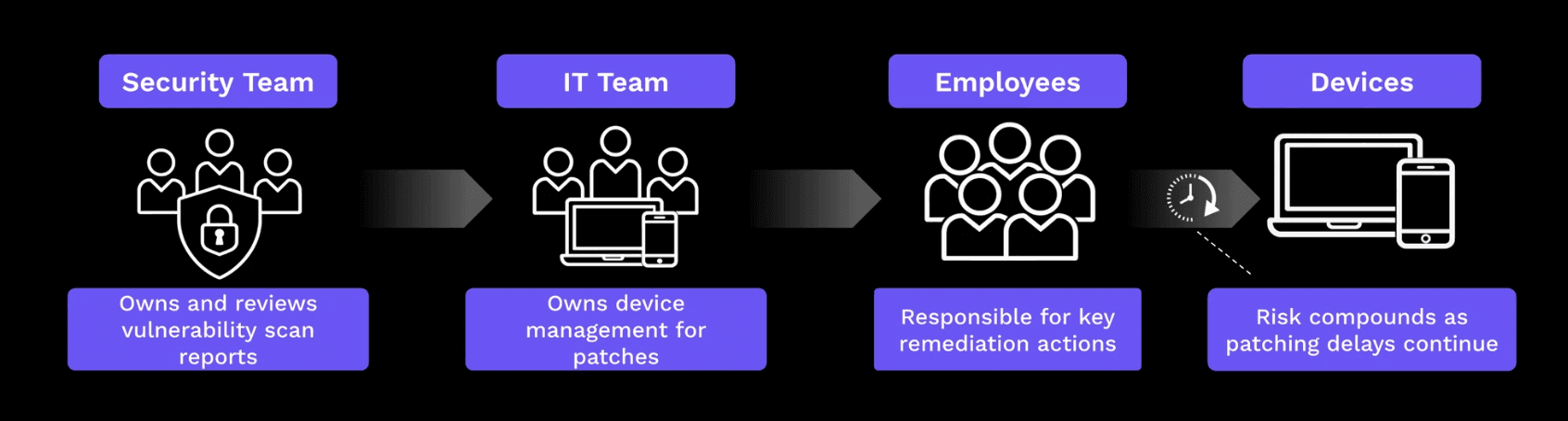
Jamf can tell you that a Mac is running a vulnerable version of an app. It can tell you the OS is three updates behind and exposed to a known CVE. What it can't do is get the person holding that laptop to install the update, then prove the fix was applied.
So the vulnerability sits in a report. Someone files a ticket. IT chases the employee. The patch window slips. The exposure stays open longer than anyone wants, and the finding lingers because nobody confirmed it was ever resolved.
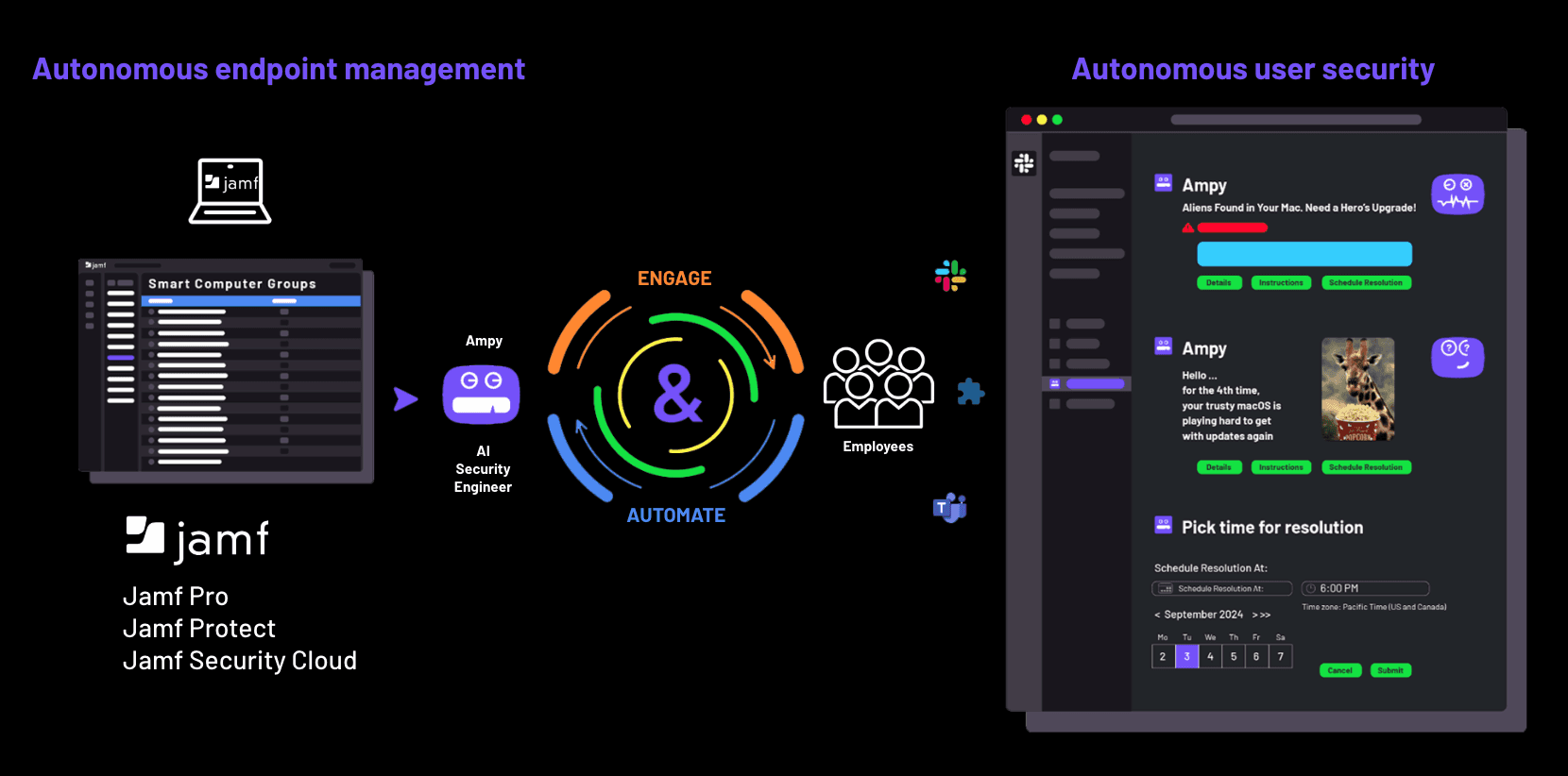
That's the gap these new integrations close. Amplifier has supported Jamf Pro for device inventory and ownership data for a while. Now we've added Jamf Protect and Jamf Security Cloud, end to end. Jamf finds the vulnerability. Amplifier maps it to the employee who owns the device and drives the fix in their flow of work. Jamf re-scans and confirms the version is patched. The finding closes on its own. No ticket required, no manual chasing, and no guessing whether it actually got done.
First, close the visibility gaps that stall everything downstream
You can't secure what you can't see, and you can't act on what you can't attribute. Most teams keep device inventory in one place and security findings in another. When a vulnerability surfaces or an endpoint agent goes missing, you need to know whose device it is and whether that person sits in a group that handles sensitive data.
The new Jamf Protect integration answers that automatically. Jamf Protect continuously monitors device health and compliance across Mac, iOS, and Windows endpoints. Amplifier ingests those findings and maps them to specific employees with department, role, and risk context, surfacing them in a prioritized Risk Advisor view powered by Amplifier's human risk graph.
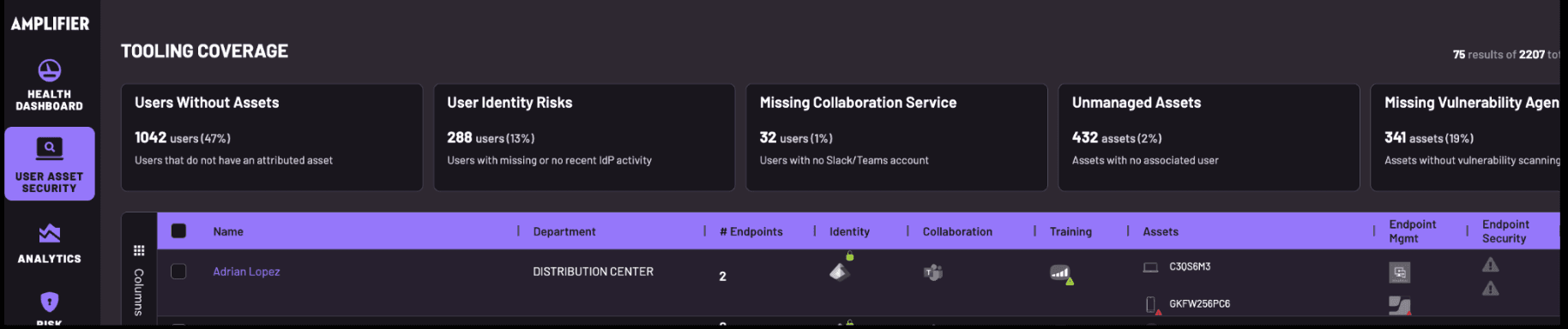
The result is a risk picture you can act on. When Risk Advisor surfaces high-severity "Endpoint Protection Missing" findings across Marketing and IT, security teams know exactly which employees are exposed, on which devices, and how long the gap has been open. Incident responders get the attribution data they need without correlating spreadsheets by hand. Audit teams get the coverage evidence they've always wanted. From there, Ampy engages each owner to get the missing agent installed and healthy.
Coverage gaps close the same way vulnerabilities do: mapped to a person, fixed in their flow of work, verified. Visibility without user context is just noise.
How the closed loop works
The value isn't any single step. It's that the whole loop runs without a human babysitting it. Here's the path every Jamf vulnerability now takes.
1. Jamf finds the vulnerability, Amplifier maps it to a person
A vulnerability is just a line in a report until it reaches the one employee who can act on it. Most teams lose hours cross-referencing device IDs against asset inventories to figure out whose Mac is whose, and they still get it wrong.
Amplifier maps identity data against the vulnerability data Jamf collects, the out-of-date apps, the exposed OS versions, the CVEs tied to installed software, and attributes each finding to the right employee and device. This mapping is powered by Amplifier's human risk graph. When device ownership conflicts arise, Amplifier reaches out to validate ownership and updates the records automatically. No spreadsheet archaeology. No tickets routed to the wrong owner. Every Jamf vulnerability now has a name attached to it.
2. Amplifier coordinates the fix in the employee's flow of work
Once the finding has an owner, Ampy, your AI security engineer, reaches that employee where they already work: Slack, Teams, or the browser. It names the vulnerable software, explains the risk in plain language, and walks them through the exact steps required to fix it.
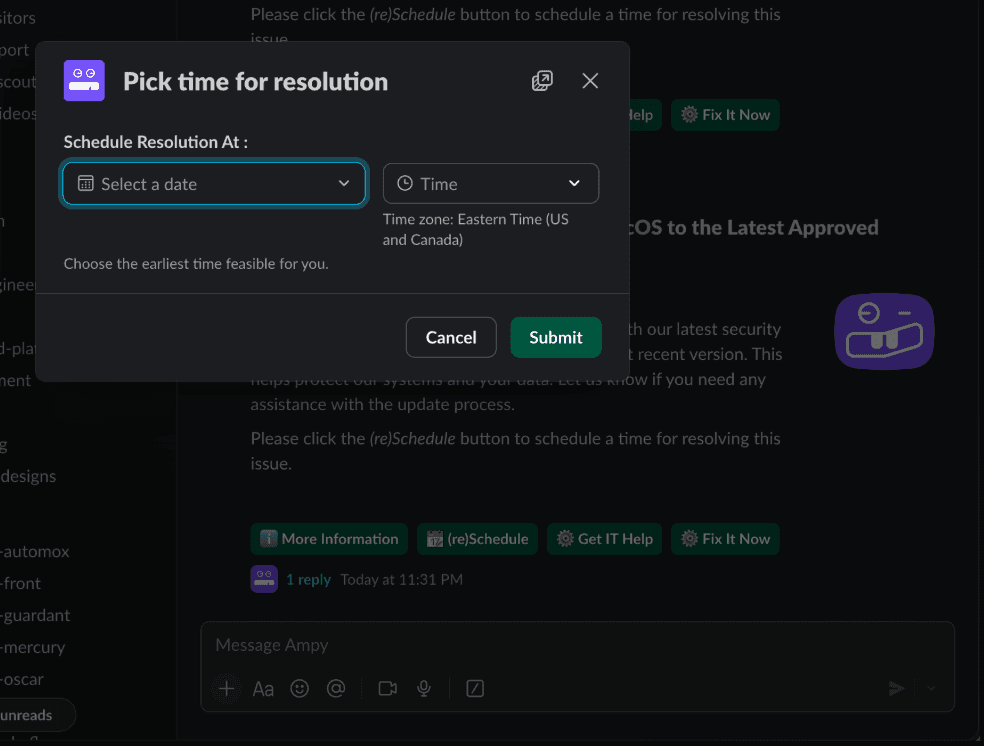
The fix gets scheduled on the employee's terms, so a forced restart never happens in the middle of a customer demo or an important board meeting. When the timing is right, Ampy guides the employee through endpoint remediation, allowing them to self-service. When the employee needs to act, the steps are spelled out. Remediation SLAs hold, with automated follow-ups that escalate in urgency as the patch window closes. And because Ampy explains the why, you get real behavior change. The next update gets easier.
3. Jamf verifies the fix, and the finding closes
This is the step that turns engagement into proof. After the employee updates, Jamf re-scans the device and reports the new version. Amplifier reads that confirmation and closes the finding against the original vulnerability.
You get a verified fix, not a hopeful one. The loop closes on evidence from Jamf itself, so the exposure window has a real end date and your report reflects reality.
Track vulnerability status across the whole fleet
You can't manage what you can't see across every device and every person.
Amplifier gives you a live view of which employees own which Jamf vulnerabilities and the real-time status of each fix, across Mac, iOS, and Windows. Track collective exposure by team, department, or risk tier. Watch the open-finding count fall as remediations verify. This is the same risk reporting Amplifier brings to the rest of your stack, now driven by Jamf vulnerability data.
And it's audit-ready. Every finding carries a clean record: when Jamf detected it, when the employee was engaged, when they fixed it, and when Jamf confirmed the close. When an auditor asks how you manage Apple endpoint risk, the closed loop is the evidence.
Why this matters
Jamf is excellent at finding endpoint vulnerabilities. Amplifier makes sure each one reaches the right human, gets fixed, and gets verified closed — exposure becomes resolution, one engaged employee at a time.
If you're running Jamf and still working vulnerabilities through tickets and follow-up threads, that's the work we automate. Amplifier is the workforce security platform with AI agents that engage your people to fix their own security issues, with a human always in the loop. Customers see endpoint vulnerability remediation run up to 5x faster once the loop closes itself.
See what Amplifier and Jamf can do together. Book a demo.
Frequently Asked Questions
What do Amplifier's new Jamf Protect and Jamf Security Cloud integrations add?
Amplifier has supported Jamf Pro for device inventory and ownership data, and the new integrations extend that to Jamf Protect and Jamf Security Cloud. Two capabilities come with it. First, Amplifier sees where those agents are missing or have stopped reporting across your fleet and engages the right employee to restore coverage, so your detection data is trustworthy. Second, Amplifier closes the loop on the endpoint vulnerabilities Jamf surfaces: it maps each finding to the employee who owns the device, coordinates the fix in their flow of work, and uses Jamf's own re-scan to confirm the version is patched before closing the finding.
How does Amplifier close Jamf vulnerability findings end to end?
Amplifier ingests the endpoint vulnerability data Jamf collects (out-of-date applications, exposed OS versions, and CVEs tied to installed software) and maps each finding to the specific employee who owns the affected device with 100% accurate attribution. This mapping of device data with identity tooling data is powered by Amplifier's human risk graph. Amplifier's AI security agent, Ampy, then reaches that employee in Slack, Teams, or the browser, explains the risk, and coordinates the update in their flow of work. Once the employee patches, Jamf re-scans the device and reports the updated version, and Amplifier closes the finding against that confirmation. The result is a verified fix with no IT ticket and no manual chasing, and an exposure window with a real end date.
What makes this different from just running Jamf on its own?
Jamf is strong at detecting vulnerable software and out-of-date operating systems, and it inventories devices to confirm what version is installed. What it doesn't do is identify or engage the person behind the device to install the update and drive the finding to closure. Amplifier adds that human-in-the-loop layer: it attributes every vulnerability to an owner, gets the employee to act on their own terms, and uses Jamf's own re-scan as the proof the fix landed. It's the difference between a vulnerability report that keeps growing and a vulnerability count that actually goes down.
Which devices does this cover?
Amplifier maps and coordinates remediation across the endpoints Jamf monitors, including Mac, iOS, and Windows. Whether it's a vulnerable app on a MacBook or an out-of-date OS on an iPhone, Amplifier attributes the finding to the right employee, engages them on the channel they already use, and confirms the fix once Jamf re-scans. One customer updated more than 1,000 iOS devices, 77% of the fleet, in a single week without socializing the effort.
Latest Blogs
Related Blogs & News
Watch